
(For the audio version of this blog, please visit: https://brothersinchristcmf.org/wp-content/uploads/2025/05/Mass-Blog-for-the-Sixth-Sunday-of-Easter-2025.mp3)
He spoke to them another parable. “The kingdom of heaven is like yeast that a woman took and mixed with three measures of wheat flour until the whole batch was leavened.” (Mat 13:33)
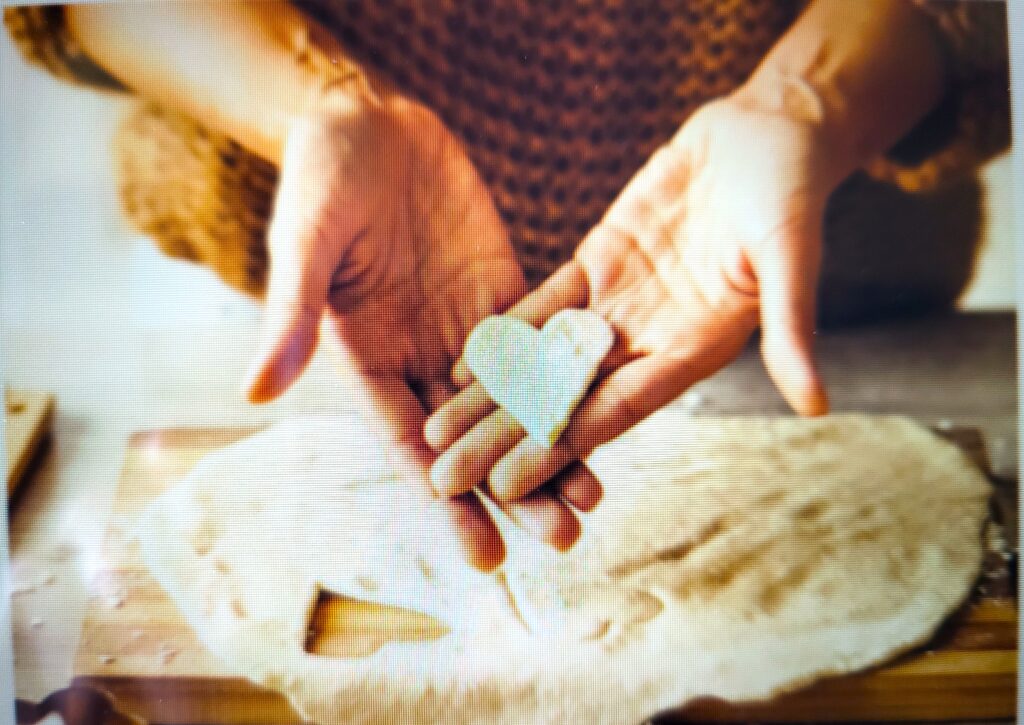
Yeast, as a leavening agent, gives bread mass, texture and structure. During Passover, Jews eat unleavened bread to commemorate their hurried Exodus from Egypt. There wasn’t time to let the bread rise. But as we commemorate Christ’s rising and entering God’s Kingdom, it’s a good time to take the time to remember his parables. The above parable shows Jesus rethinking a process which he also described in a negative way—warning us about the leavening effect of humanity’s worst tendencies.
“Beware of the leaven of the Pharisees and Sadducees,” he told his disciples, referring to the hypocrisy and self-righteousness laced throughout their teachings and practices (Mat 16:6). These threatened to displace the truth Jesus came to grow in them.
A recent research paper relating yeast to human cell biology states: “Yeasts inhabit the same kingdom of life as humans, and therefore share fundamental biological processes with them.”
Thus via modern science we see the genius of Jesus’ multiplication of loaves to feed masses of people. These souls, rather than escaping slavery, were running to him for freedom. He leavened their faith using parables so they could understand God’s truth, become disciples of it, and share their newfound faith with others—creating more disciples, and an endless source of nourishment.
Leavening is accompanied by kneading, which combines and blends the formula’s ingredients to develop structure, substance and flavor. The same applies to our understanding of, and faith in, Christ’s rising. Think of his Love as an eternal leavening agent, as on this Sunday before the Ascension we consider the message Christ gave his disciples about that key ingredient in the Bread of Life and how it propagates like yeast through the human food chain:
“Whoever loves me will keep my word, and my Father will love him, and we will come to him and make our dwelling with him. … Yet the word you hear is not mine but that of the Father who sent me. … The Advocate, the Holy Spirit, whom the Father will send in my name, will teach you everything and remind you of all that I told you.” (John 14:23-29)
Remember how God’s love is spread throughout this world the next time you receive the bread of life in Holy Communion alongside others who both receive it and share it.
–Tom Andel
The effect we can have on those around us is the description of yeast in this reflection. When we are good yeast, we lift people up and can expand their ability to do likewise. When bad, we can crush the spirit of others and dim their sight to see the goodness God has in store for them.
Of course it is our calling to do good, spread God’s word, and bring joy whenever possible. Human behavior can make this difficult, and often times in unexpected and irrational ways. We often live off the yeast of emotion and react in hostile and insensitive ways, even to those closest to us.
Being good yeast is a constant struggle, but a calling nonetheless!
Bad yeast is bad because it’s inert as dust. Bad salt is bad because it’s bland as lukewarm porridge. Inertia and blandness are bad human qualities too and should be shaken off or spat out.