
(For the audio version of this blog, please visit: https://brothersinchristcmf.org/wp-content/uploads/2025/09/BIC-Mass-Blog-for-theFeast-of-the-Exaltation-of-the-Holy-Cross-2025.mp3)
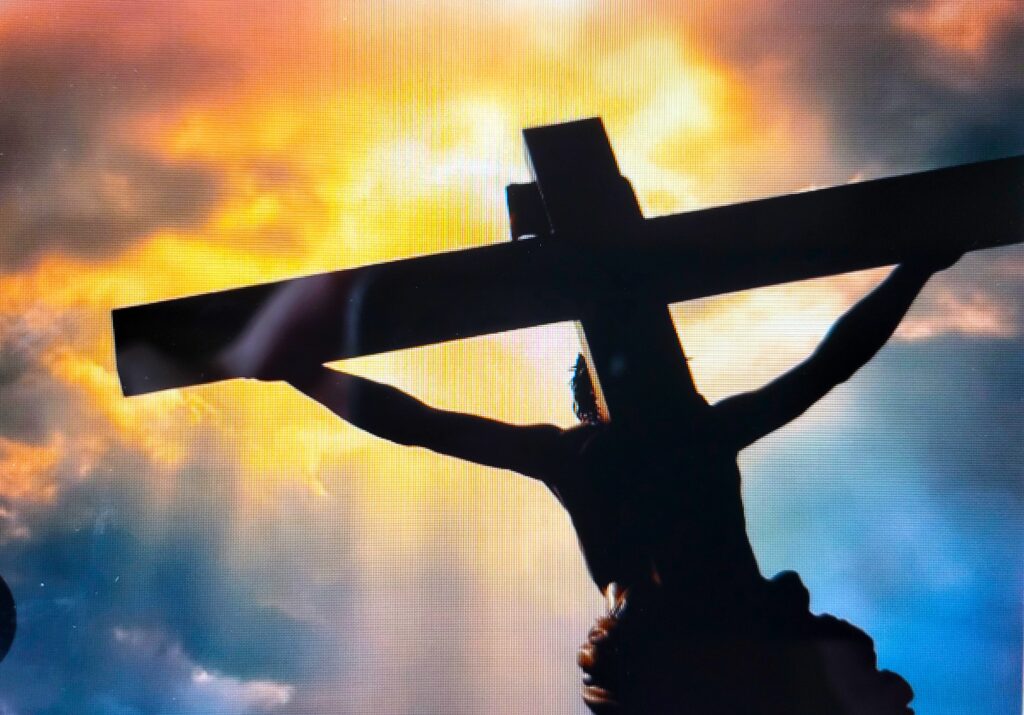
As we contemplate and exalt the holiness of Christ’s cross this Sunday, we can also imagine the fear that paved the way to that exaltation. Sunday’s first reading (Numbers 21:4b-9) shows the ancient origins of our fear.
In punishment for their complaints and lack of faith on their long journey out of fear’s slavery, God sent saraph serpents among the Israelites, killing some and terrifying all. After the people repented through Moses, God inspired him to design a symbol that would foreshadow the life-saving properties of Christian faith: their sin (the snake) mounted on a pole. It would save them in the short run, but it would also remind them of their slaveries to fear AND death.
They still believed they’d cease to exist someday. The sight of a pole-mounted serpent might even have instilled in them the kind of fear Dracula felt when looking at a crucifix—except we can imagine this fictional character being reminded of the eternal death from which Christ’s dying wouldn’t save him. Kind of like Satan’s personal hell. And maybe even that of people without faith.
But even among the faithful, Christianity’s most sacred symbol of freedom from our sins can be misunderstood. Some of us wield it as a weapon representing the sins of others, like a vampire hunter might. All that does is deprive us of the opportunity to identify with the one who took our rightful place on that cross—thus becoming our sin, dying with it, and rising from it.
Paul was almost one of those self-dooming judgmental types until the risen Christ saved him from himself and recruited him as history’s most powerful evangelist. In Sunday’s second reading from his letter to the Philippians (Philippians 2:6-11), Paul summarizes in a few words the vast power of the cross our faith venerates:
Christ emptied himself, taking the form of a slave, coming in human likeness; and found human in appearance, he humbled himself, becoming obedient to death, even death on a cross. Because of this, God greatly exalted him. … At the name of Jesus every knee should bend, and every tongue confess that Jesus Christ is Lord,
As Jesus reassures us in Sunday’s gospel reading from John (John 3:13-17), his being lifted up on a cross just as Moses lifted that pole-mounted seraph was life-saving. But we also believe the Son of Man was lifted up to save ALL who believe, and that by living our belief, we spread the good news of Christ’s driving a stake through death’s heart.
–Tom Andel
We all know the core element of our Christian tradition is the fact that Christ came, He taught, and He died to save us from our sinfulness.
The key phrase in this week’s blog identifies one key factor that we have a tendency to overlook or take for granted. It says:
“But we also believe the Son of Man was lifted up to save ALL who believe.”
It’s the believe part that caught attention. In receiving the sacrament of reconciliation, we must have true contrition for the absolution to be valid. Just so, we also must believe that Christ died to save us for the gift to be granted. Not sure if my theology is correct, but that resonated with me.
Christ, I believe, help my unbelief!
Forgive me if I bring up Dracula again, but he was deathly afraid of the cross because he truly believed who Christ was and what His cross represented. Unfortunately for him, and the real Satan he represents, he also believed sacrifice was something that OTHERS did, and that the only true love was SELF love. Through John’s gospel (John 14:12), Jesus equates belief with action: “Whoever believes in me will do the works that I do, and will do greater ones than these, because I am going to the Father.” Belief is the work of sacrificial love done for God and neighbor. Give blood, don’t suck it.