
(For the audio version of this blog, please visit: https://brothersinchristcmf.org/wp-content/uploads/2025/09/Mass-Blog-for-the-27th-Sunday-in-Ordinary-Time-2025.mp3)
“Hard times don’t create heroes. It is during the hard times when the ‘hero’ within us is revealed.” — Bob Riley
Our faith tells us we were made for heroism. It is the living out of God within us—God’s Holy Spirit—that gives us purpose. Our world’s pop culture loves heroes, and many quotes can be found online saying what Bob Riley did. But few attribute heroic courage to a supreme being.
An article in Parade Magazine last year listed “100 Quotes on Strength and Resilience to Help Get Us through Tough Times,” and not one of them came from scripture. It can’t be for lack of material. The readings from this Sunday’s liturgy alone are packed with heroic inspiration.
In the first (Habakkuk 1:2-3; 2:2-4), the prophet Habakkuk, a Job-like complainer pleading with God to save his people, asks, “Why must I look at misery?” God answers with a vision of deliverance that fills the few pages this prophet is allotted in the Bible. This short book can be further boiled down to a heroic super power for our modern times: Patience.
“[This vision] will not disappoint; if it delays, wait for it, it will surely come, it will not be late,” Habakkuk hears the Lord tell him. “The rash one has no integrity; but the just one, because of his faith, shall live.”
Faith fuels patience, and patience affords time for courage to emerge. As a prisoner for his teachings, Paul had lots of time to grow courage—not only for himself, but to help his disciple Timothy carry on with their work of spreading God’s word.
“God did not give us a spirit of cowardice but rather of power and love and self-control,” he writes Timothy from a prison cell (2 Timothy 1:6-8, 13-14). “So do not be ashamed of your testimony to our Lord, nor of me, a prisoner for his sake; but bear your share of hardship for the gospel with the strength that comes from God.”
Courage doesn’t only emerge during battles against outsiders. The biggest conflicts are often within, and the enemy is our own ego. Both Habakkuk and Paul had to work at tamping down what they wanted so God’s will could be done through them. Even Jesus, as he faced certain death at the hands of his enemies, was tempted to escape his fate. But the spirit of courage he shared in prayer with his Father spoke the words of a servant: “Not my will, but yours be done.”
This heroic moment in the Garden of Gethsemane was foreshadowed by what Jesus taught through Luke in Sunday’s gospel reading (Luke 17:5-10 ) about the courageous soul of a servant. He invites all of us who feel smug about whatever status we’ve achieved in this life to imagine ourselves at the customer-facing end of any supply chain meeting human needs:
“Is [the master] grateful because [the servant] did what was commanded? … When you have done all you have been commanded, say, ‘We are unprofitable servants; we have done what we were obliged to do.'”
In this computerized world, we flesh & blood bots must realize we’d be nothing without the operating system dictating our core functionality. But we should dig a little deeper than the writer of that aforementioned Parade magazine article did so we can identify the author of heroism’s source code. We can thank that article, however, for giving this article its opening quote from Bob Riley.
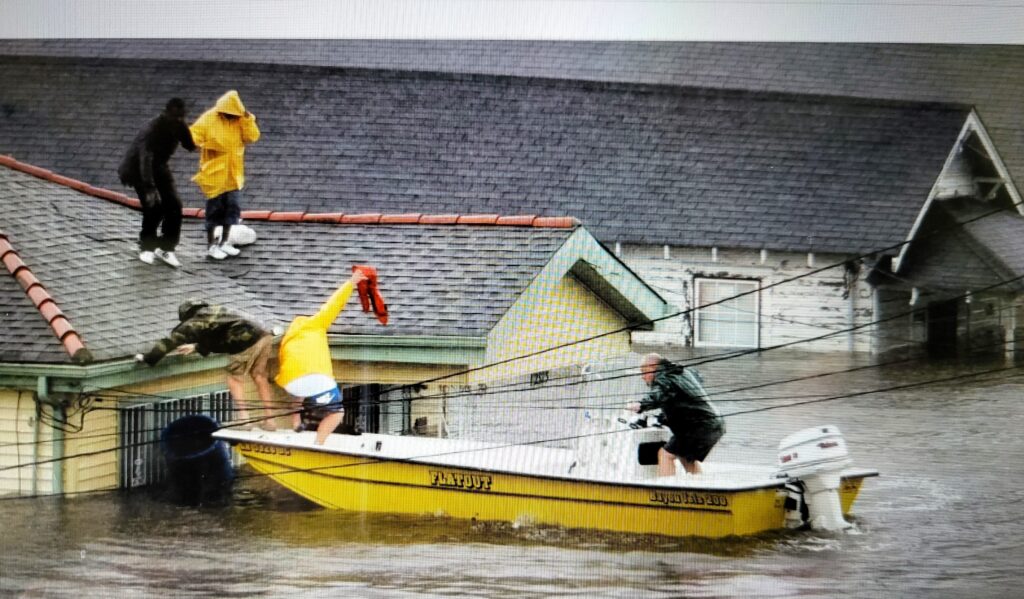
As governor of Alabama during the devastating Hurricane Katrina in 2005, Riley also helped citizens from other states manage through this disaster’s devastating aftereffects. By living his own message, he lived Christ’s message that the hero within us is obliged to be a lowly public servant to anyone via the Master’s Spirit within them.
–Tom Andel
Through our baptism we are all given supernatural capacity we don’t realize we have. If we share the same Holy Spirit of Christ in the Holy Trinity, what limitations do we really have? Jesus knew we would limit ourselves so he would exhort us to have faith.
“Faith of a mustard seed” is a metaphor used by Jesus in the Bible to convey that even a small amount of genuine, confident faith in God can accomplish great things. The parable teaches that the power isn’t in the size of the faith but in the object of faith—the all-powerful God. Just as a tiny mustard seed grows into a large tree, small faith can grow and have a profound, transforming impact.
The real limitations are those we put on ourselves. We can do great things for God if we will allow Him to do so through us.
Doubt can also grow from a seed the size of a mustard seed. The largest mountains we must move are often overgrown with doubts, planted throughout our lifetime. Thanks God, the seed of faith He plants at our request grows fast to invade and kill those crops.