
(For the audio version of this blog, please visit: https://brothersinchristcmf.org/wp-content/uploads/2026/01/Mass-Blog-for-the-4th-Sunday-in-Ordinary-Time-2026-1.mp3)
This Sunday, as we read the beatitudes for the umpteenth time, let’s focus on those in the crowd surrounding Jesus whom he blessed for taking courageous action. (Matthew 5:1-12a) We tend to remember the poor in spirit, the mourners, and the meek because they lead off his beatitudes. But let’s also remember and identify with those who are blessed with the courage to help those whom Christ mentions at the top of his list.
What about those who hunger and thirst for righteousness? Hunger and thirst are both a yearning and a calling to seek satisfaction that only comes from the courage to act. God’s righteousness encourages the mercy, purity and peace necessary to take action against persecution and to share that power with other citizens of His Kingdom on earth.
God’s grace is a desire in us that, though we are humble, gives us the wisdom, strength and courage to act on His law of love. As Zephaniah tells us in Sunday’s first reading, that requires us to both seek it and live it so we can find and share God’s protective shelter. (Zephaniah 2:3; 3:12-13)
Outside that shelter are those who seek shelter in their own wisdom—and boast about it. They even deride people of faith as weak and foolish. But in Sunday’s second reading, Paul tells us God chose the weak fools of the world to shame the wise with Divine foolishness. (1 Corinthians 1:26-31)
We do it from the shelter of the blessings Christ laid out. For when we are at our saddest and lowest, we can still find sufficiency in God’s grace. Paul learned to manage the power of having “enough” so he wouldn’t join the world’s boasters who always want more. In 2Corinthians 12:7-9 he tells us he was given “a thorn in the flesh” to remind him that he IS flesh that can only be healed by God’s Holy Spirit dwelling in him.
“Three times I begged the Lord about this,” he says, “that [the angel of Satan] might leave me. But he said to me, ‘My grace is sufficient for you, for power is made perfect in weakness.’ I will rather boast most gladly of my weaknesses, in order that the power of Christ may dwell with me.”
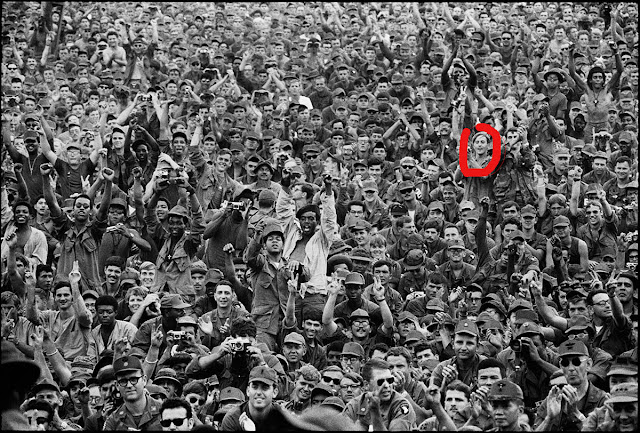
Christ’s power is courage, and that’s the Holy Spirit he gave the crowds through his Beatitudes. Do we have the courage to admit we’re a face in that crowd?
–Tom Andel
The Beatitudes do not describe passive observers; they summon active disciples—then and now. When Christ proclaims these blessings, He is not addressing distant saints but the ordinary faces-in-the-crowd people like us. Your final question calls for personal honesty: do we have the courage to recognize ourselves as His followers and to share His message? To answer yes, we must trust that the grace of Christ transforms our weakness into the very place where His power begins.
Beatitudes are blessings, and most are made of flesh and blood and powered by one Holy Spirit.
Grant me, and all of us, the grace to hear when He speaks to our ordinary weakness, that His Spirit may make it extraordinary.
Our conscience is, or should be, our headlight to see through life’s journey–especially when things are darkest. What is our conscience? One definition calls it “an inner feeling or voice acting as a guide to the rightness or wrongness of our behavior.
A well-formed conscience is born of many factors such as growing up in a good environment where virtue and selflessness is the norm. It is also strongly influenced by the teachings of Jesus Christ, and the beatitudes are a clarion call.
Living out the beatitudes is not easy. Following Jesus is not easy. It isn’t supposed to be.
Thomas, your friend Father Nathan Cromly offered attendees of this past Sunday’s Knights of Columbus Men’s Breakfast/Retreat additional food for thought about conscience via his scholarship about St. Paul. In his new book, “Coached by Paul the Apostle,” Cromly notes that God wants to accomplish as much through our weaknesses as through our strengths. Father Nathan reveals that Paul’s sinful past stayed with this saint in the making, and he used the pain of his own conversion from Saul to Paul to convert others to Christ.
“Who could have hurt as many people as he had hurt and not thought about the damage he had done,” Cromly asks us. “What about the children of the families whose parents he imprisoned–what happened to them? … What about the number of people who turned their back on their faith in Jesus because of their fear of Paul? … Hadn’t the entire Christian community of Jerusalem been dispersed because of him? … If he had let them, these questions could have paralyzed Paul into a passive stranglehold of fear for the rest of his life. … And when we consider all of St. Paul’s incredible feats for Christ in his life, [that same realization] can take us aback, too. We can forget that everything Paul did to spread the Gospel over the world came from an inner spiritual victory he had to win over himself before he could win the world over for Jesus. The chief battle for all of us is to choose to be humble enough not to let our imperfections get in the way of the love Jesus has for us. Following Paul’s lead, we learn to be humble enough to boast of our weaknesses, embrace them, and dare great things for Christ anyway.”
Our biggest takeaway from St. Paul–and Father Cromly’s research into him–is that in our weakness can be found a great conscience-formed strength!