
(For the audio version of this blog, please visit: https://brothersinchristcmf.org/wp-content/uploads/2026/02/Mass-Blog-for-the-1st-Sunday-of-Lent-2026.mp3)
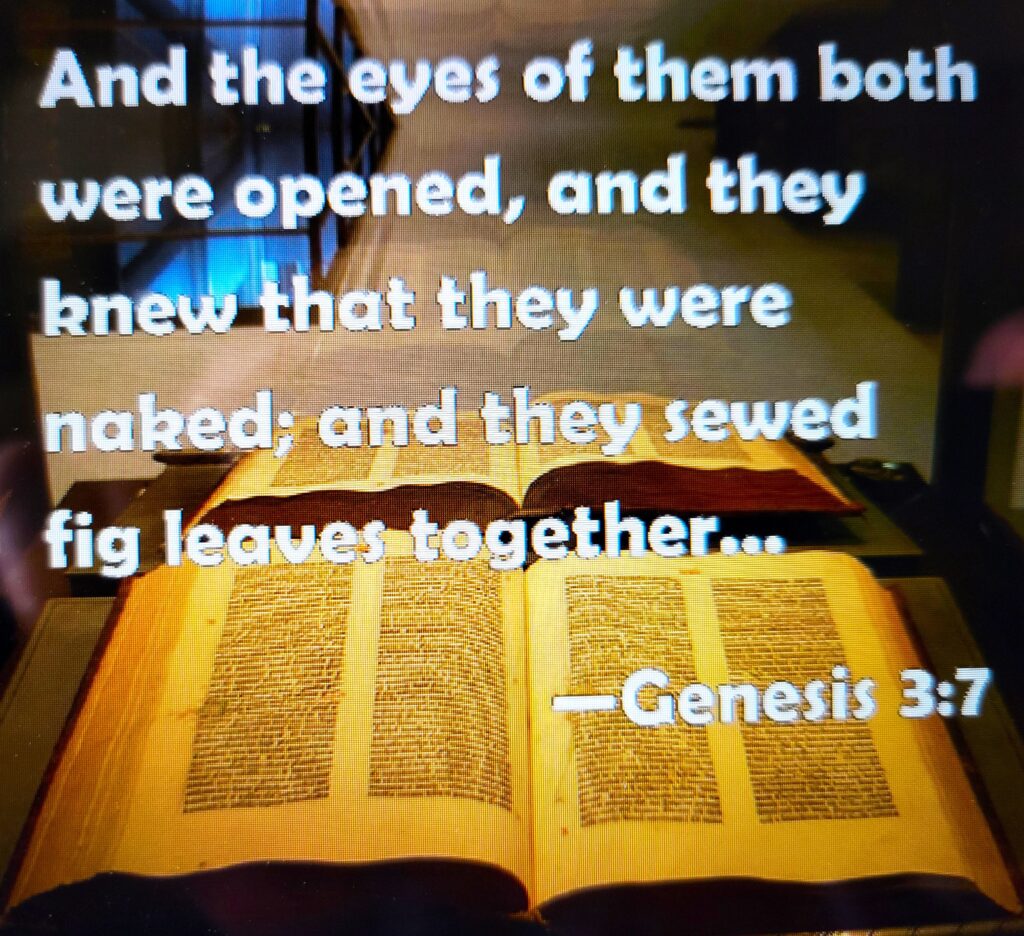
The first reading for the first Sunday of Lent is a condensed version of the Adam & Eve story from the second and third chapters of Genesis (Genesis 2:7-9; 3:1-7). Via Adam’s rib, one flesh became two—man and woman, husband and wife. Both were created naked and without shame—and the two once again became one through marriage. Until Eden’s next chapter.
Shame enters through the naked desire of pride, introduced to them by evil incarnate. Selfishness destroys their unity. Adam the First thus fails to do for his spouse what the second Adam did for his: help her reclaim her innocence.
Jesus the Christ did that for his spouse (we the Church) by confronting evil in a way the first Adam couldn’t. Adam 2 was one with God the Father and God the Spirit. The Evil one tried tempting Jesus to indulge in humanity’s sins of gluttony, pride and greed, but Jesus turned the tables on humanity’s nemesis. In the first two temptations of Christ, Satan goes to his old playbook—appealing to our hungers in body and mind. Apparently this old snake believed Jesus was the same as every other man who came after the first Adam he confronted—that he would grasp for equality with God by trying to bring God down to our level:
Then the devil took him up to a very high mountain, and showed him all the kingdoms of the world in their magnificence, and he said to him, “All these I shall give to you, if you will prostrate yourself and worship me.” At this, Jesus said to him, “Get away, Satan! It is written: The Lord, your God, shall you worship and him alone shall you serve.” (Matthew 4:1-11)
With this exorcism, Satan is not only sent back into his Kingdom of death, but humanity is about to be given a way out of it. Jesus spends the next three years of his earthly life showing us the way back to the Kingdom of God—the road to which we can only find in our hearts.
But throughout the ensuing score of centuries, the shame of our nakedness has continued to tempt us into lusting after all of humanity’s deadly sins. We lust not only for flesh, but for the pride of believing our modern world has divorced us from our spouse. We want to believe we belong to ourselves, and without shame, we now celebrate our nakedness. We’ve thrown off the fig leaf but still crave the figs.
God offers himself for our food, but like Satan, we continue searching in vain for godliness at our level instead of rising with our spouse to attain unity with God the Father, Son and Spirit. Only through that unity can we achieve the righteousness the first Adam lost through his selfishness. In Sunday’s second reading, Paul beautifully summarizes the wedding gift the second Adam offers us:
For just as through the disobedience of the one man the many were made sinners, so, through the obedience of the one, the many will be made righteous. (Romans 5:12-19 )
Adam 2’s shameless innocence is the only road back to Eden. Lay your heart bare to him and find it.
–Tom Andel
Tom, your reflection is a compelling reminder of what innocence truly is. Innocence is not naïveté; it is obedient unity with God—trust instead of self-assertion, unity instead of isolation, obedience instead of pride, and self-gift instead of self-grasping—virtues that those of us born with original sin must continually strive toward. While the world often reduces innocence to inexperience or ignorance, true innocence is a strength rooted in loving trust and faithful obedience.
George, your insights made me want to look up the etymology of “innocent.” Like many of the words we Catholics have come to love, it’s rooted in Latin: “in” meaning “not,” and “nocere” meaning “to hurt.” Isn’t it beautifully appropriate that our Divine Physician would live and teach the essence of the Hippocratic Oath prescribing, “First, do no harm?” But by his actions he also taught that being innocent is essential but not sufficient. We must also heal. Love is the best medicine to treat the consequences of our sins, and it requires us to develop and deliver it.
The temptations of Jesus always reminds me just how disposable Satan is. How he will use anything to lead us away from God, even scripture itself as a weapon. We must be prudent not do the same by being mindful of context and understanding when we share it. Praying that we all stay innocent and let the spirit lead us!
Mike, I never heard the word “disposable” applied to Satan, but when we see how effectively Jesus uses the truth to dispose of his lies, we realize the truth is something we always need to keep within reach. Luke’s account of these temptations tells us why, because while Mark’s concludes, “then the devil left him,” Luke’s says “he departed from him for a time.” You’re right to remind us how some use scripture to turn people away from God. Non-believers like to point to the discrepancies among the gospels (like the one I just cited) to turn people away from Scripture’s basic truths, but as the Book of Sirach reminds us, it’s too easy to blame God for such misdirection. God gave us free will and intelligence to make the right choices. Sirach advises, “Do not say: “He himself has led me astray,” for he has no need of the wicked. Abominable wickedness the LORD hates and he does not let it happen to those who fear him. God in the beginning created human beings and made them subject to their own free choice. If you choose, you can keep the commandments; loyalty is doing the will of God. Set before you are fire and water; to whatever you choose, stretch out your hand.” (Sirach 15: 12-16). Water quickly disposes of fire.
Satan is the king of temptation and how often he wins these battles in our life. Temptation for food, drink, mind numbing attraction to TV and social media and of course many sinful options that take our sanctity away from us.
I suppose if God’s first creatures could be seduced by the devil, little wonder we are so vulnerable. He could have wrecked the whole show but for Jesus stepping into the story of history and all of our personal journeys to offer his hand and lift us out of the pit.
His hand is always extended. We have but to take it!
Wishing all a focused, peaceful, and holy lent!
Thomas, an even bigger problem with becoming numb to our many sins is becoming paralyzed by them–and giving up. Your friend Father Nathan Cromly uses St. Paul as the prime example of what might have been had this saint let his own abysmal record keep him from taking a leadership role in helping others learn from the many problems they themselves might have caused. In his book “Coached by St. Paul,” Cromly writes that having problems is not the problem; having problems with having problems is. Cromly surveyed a population of Christians called to lead, and he found the most common reason for paralysis is fear of making the wrong decision. They didn’t trust the Holy Spirit to lift them out of that pit you mentioned. But in Paul’s case, instead of surrendering to a seemingly unforgivable past marked by making orphans of the children whose parents he imprisoned, making paupers of those people while they were in prison, and scaring others away from following the path to salvation that Christ blazed, Paul used his own conversion story to release others from a lifelong passive stranglehold of fear and inaction. Lent is the perfect time to release ourselves from sin’s hammerlock.