
(For the audio version of this blog, please visit: https://brothersinchristcmf.org/wp-content/uploads/2026/04/Mass-Blog-for-the-4th-Sunday-of-Easter-2026.mp3)
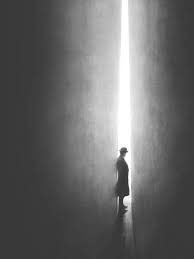
Pain. We’re born in it then run from it for the rest of our lives. Sin itself is pain, and in Sunday’s first reading (Acts 2:14a, 36-41), Peter forces an entire population to face their guilt before they can even think of squeezing through a painfully narrow gateway to a pain-free existence.
Then Peter stood up with the Eleven, raised his voice, and proclaimed: “Let the whole house of Israel know for certain that God has made both Lord and Christ, this Jesus whom you crucified.”
Now when they heard this, they were cut to the heart, and they asked Peter and the other apostles, “What are we to do, my brothers?” Peter said to them, “Repent and be baptized, every one of you.
In Sunday’s second reading (1 Peter 2:20b-25), Peter addresses us 21st Centurions directly about the pain of doing right in an era when wrong feels so right.
Beloved: If you are patient when you suffer for doing what is good, this is a grace before God. For to this you have been called, because Christ also suffered for you, leaving you an example that you should follow in his footsteps.
Christ’s footprints mark a pathway leading to the narrow gateway guarded by St. Peter, who himself is probably still amazed that he squeezed through after inflicting on Jesus the pain of denying his Master. When he first faced the excruciating realization of what he had done, he was probably more prepared to face the pain of joining fellow sinners stampeding toward the wide gateway to self-destruction, as described by Jesus through Matthew’s gospel (Matthew 7:13-14) and in the excerpt from John’s which we’ll read this Sunday. Through John, Jesus tells us: “I am the gate. Whoever enters through me will be saved.” (John 10:1-10).
As a man of faith, Peter knew better than to do what he did to Jesus, which probably made his guilt all the more painful. As for Paul, when he was Saul, he gladly inflicted on the faithful the kind of pain that he himself wouldn’t endure until his own conversion and reroute from Satan’s gaping gate toward the narrow one guarding Christ’s Kingdom. He believed that even for him, that would be an extra-tight squeeze.
As Fr. Nathan Cromly writes in his book, “Coached by Paul the Apostle,” when Paul was converted along the Road to Damascus, he found that the narrow way leading to Paradise was also a long one. During his passage along the way, as detailed by Cromly, Paul endured imprisonment, beatings, betrayals, loneliness and even dangerous weather—yet he continued on.
“In the end,” Cromly concludes, “like the world’s savior whose footsteps he [and Peter] followed, Paul ended his earthly life penniless, far from home, alone, imprisoned, and executed by a hostile government. Be it in worldly success or failure, rejection or fame, life or death, Paul was focused on something other than what he could do for Christ in a worldly way. He was focused on something far deeper. He lived to love Jesus in this world and to be with him in the next. The question for us becomes, will we let St. Paul coach us along the path God has in mind for us? Do we want to be saints?”
That pathway begins once we start squeezing our egos down to fit through God’s narrow gate. But be of good cheer. All the saints are holding it open for us because they’ve lived our pain.
–Tom Andel
Physical pain can be a hard but honest teacher when seen through faith. It breaks the illusion that I am in control and reminds me how much I depend on God. When life is smooth, it is easy to take blessings for granted and forget to be thankful. Pain often wakes me up to what I overlook.
Still, pain is not always a punishment for sin. Not every sickness or ache is caused by my personal wrongdoing. But suffering can reveal what is in my heart—impatience, pride, anger, fear, or spiritual laziness—and become a chance to turn back to God.
When pain comes, I try to remember to respond in three ways:
1. Be grateful — for the gifts I often overlook: health, rest, family, friends, daily help, and ordinary good days.
2. Trust God — admitting I am limited and cannot control everything.
3. Offer it to Christ — joining my suffering to His and praying for others.
Pain may speak loudly, but it should not have the last word. Grace should. If suffering leads me to gratitude, humility, and deeper faith, then even pain can bear fruit.
And when the pain passes, the lesson should remain: to walk the narrow path not only when hardship reminds me to, but also in the good times.
George, it all boils down to the widely quoted aphorism that started as a concise teaching from German Philosopher Friedrich Nietzsche and ended up a hit song for Kelley Clarkson: “What doesn’t kill you makes you stronger.” Jesus was the only human who turned the pain of death into immortality.
“Do we want to be saints?”
The provocative question of our lives, and far easier said than done. Of course we want to become saints, and we are granted entrance through the blood of Christ. Yet, so many seem to reject this most extraordinary gift as if it were a losing lottery ticket.
The devil has been so effective at coercing our hearts and minds, that we jeopardize our entrance through sin. That’s it, through sin.
Overcome that obstacle and we are IN! We hold the key. Better said, we are given the key. Will we use it?
Thomas, it seems the ideas of sainthood and holiness have been tossed into humanity’s wastebasket of irrelevance along with the concepts of sin and souls. Doing the right thing is now considered progressive or even political if it’s considered at all. It’s actually closer to another P word: Performative. We do what’s considered the right thing so we can be seen doing it. Sin? That’s what “bad” people do. We need a reintroduction to sainthood because many of the saints considered the greatest in the minds of surviving believers believed themselves to be the worst sinners. The difference between them and today’s progressive saints is what they did behind closed doors. They prayed. As Jesus teaches through Matthew’s Gospel, “When you pray, go to your inner room, close the door, and pray to your Father in secret. And your Father who sees in secret will repay you.” Prayer is another thing we need to retrieve from our wastebasket of irrelevance. It’s the key to being heard beyond that narrow gateway.
In no particular order, Thomas doubting, Peter denying Jesus 3 times, (then) Simon having the faith to step out of the boat but then losing faith AS THE MIRACLE IS HAPPENING TO HIM!! Of course Judas betraying Jesus. All of these remind me of how I am so quick to judge the foolishness of others, thinking “if it were me, I’d…”, while totally excusing myself of doing the very same types of things. Praise God for his patience and mercy with me!
Mike, as head of our Knights Lafayette Council, you’re already doing the work of Blessed Michael Mcgivney by holding the gate open for men looking for better uses of their time while still here in this world.
Thanks Thomas!
Thanks as always for reading and sharing, Chris.